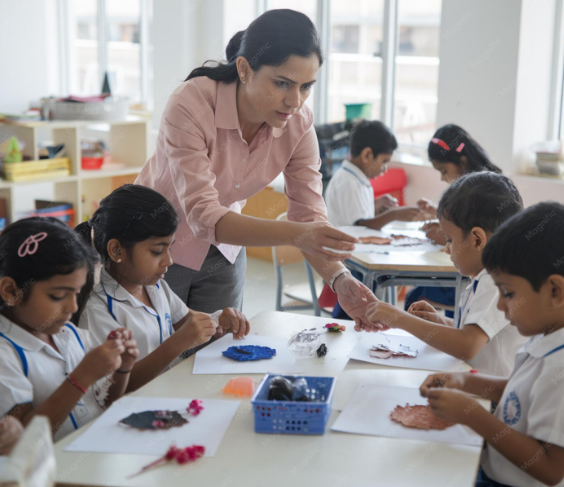
Early childhood education plays an important role in helping young children develop social, emotional, language, cognitive, and physical skills. Cadence Education is a provider of early childhood education and care with schools serving infants, toddlers, preschoolers, and school-age children. Its programs are designed around age-appropriate learning, classroom experiences, family communication, and child development. Cadence Education operates multiple early learning brands and schools across the United States, providing educational programs for children during their early years.
What Is Cadence Education?
Cadence Education is an early childhood education organization focused on learning and care for young children. Its schools provide programs for different developmental stages, beginning with infants and continuing through preschool and, at some locations, school-age programs.
The organization combines education and childcare so that children can learn in structured environments while receiving age-appropriate care. Classroom activities can include language development, early mathematics, science, creative activities, physical movement, social interaction, and opportunities for exploration.
Early childhood programs can establish important foundations before children enter elementary school. Rather than focusing only on academic knowledge, quality early learning also considers communication, independence, cooperation, confidence, and curiosity.
Programs for Infants
Infancy is a period of rapid development. Babies begin developing communication, movement, sensory awareness, and social relationships during these early months.
Cadence Education schools offer infant programs designed around care routines and developmental experiences. Teachers and caregivers can support babies through activities involving sounds, movement, sensory exploration, books, music, and interaction.
For infants, learning does not look like a traditional classroom lesson. Everyday activities such as talking, singing, reading, and responding to a child’s interests can contribute to early development.
A consistent environment can also help young children become familiar with routines and caregivers.
Toddler Education
Toddlers experience significant changes as they develop language, mobility, independence, and social awareness. They naturally want to explore their surroundings and participate in activities on their own.
Toddler programs can provide opportunities for children to practice these emerging abilities. Activities may involve simple problem-solving, storytelling, art, music, movement, sensory play, and early counting.
Teachers can also help toddlers learn how to interact with other children. Sharing materials, taking turns, expressing feelings, and following simple routines are important parts of early social development.
Preschool Learning
Preschool is a major stage in early childhood education because children begin developing skills that can support their transition to kindergarten.
Cadence Education preschool programs emphasize learning through developmentally appropriate activities. Children can participate in early literacy, mathematics, science, creative expression, physical activities, and social learning.
Early literacy can include listening to stories, recognizing letters and sounds, developing vocabulary, and expressing ideas. Early mathematics can involve counting, sorting, patterns, shapes, measurement, and basic problem-solving.
These activities introduce concepts through experiences that are appropriate for young learners.
Learning Through Play
Play is one of the most important ways young children explore their surroundings. It allows them to experiment, make choices, communicate with others, and practice solving problems.
In an early learning environment, play can be connected with educational goals. A building activity can introduce concepts related to balance and structure. A pretend-play activity can support language and social development. Sorting games can introduce early mathematical thinking.
This approach allows children to learn while remaining actively involved in the experience.
Social and Emotional Development
Early education is not only about academic preparation. Children also need to learn how to recognize emotions, communicate needs, build relationships, and respond to social situations.
Teachers can support social-emotional development by modeling respectful communication and helping children work through everyday conflicts.
Young learners gradually develop skills such as cooperation, patience, empathy, and self-regulation. These abilities can influence how children interact with classmates and adults throughout their educational journey.
Language and Literacy Development
Language development begins long before children learn to read independently. Conversations, songs, storytelling, picture books, and classroom discussions all provide opportunities for children to hear and use language.
Early childhood teachers can encourage children to describe experiences, ask questions, identify objects, and communicate ideas.
Reading activities can also help children become familiar with books, letters, sounds, characters, and story sequences. These experiences provide a foundation for later literacy development.
Early Mathematics
Mathematical thinking can be introduced through everyday classroom activities. Young children can learn about numbers, quantities, shapes, patterns, comparisons, and spatial relationships through hands-on experiences.
For example, children might count objects, organize materials by size, identify shapes, or create simple patterns.
These activities help make mathematics understandable without requiring young children to rely solely on worksheets or formal instruction.
Science and Exploration
Children are naturally curious about how things work. Early childhood classrooms can use this curiosity as an opportunity for scientific exploration.
Teachers may encourage children to observe plants, investigate water, explore textures, compare objects, or discuss changes in weather.
The objective at this age is not to memorize complex scientific terminology. Instead, children can learn to observe, ask questions, make simple predictions, and describe what they discover.
Creative Activities
Art, music, dramatic play, and other creative activities can support several areas of child development.
Drawing and painting allow children to experiment with shapes, colors, and materials. Music activities can encourage listening, rhythm, movement, and memory. Dramatic play can help children communicate ideas and explore different social situations.
Creative learning also gives children opportunities to make choices and express themselves.
Physical Development
Young children need opportunities to develop both large and small motor skills.
Large motor development involves activities such as running, jumping, climbing, balancing, and throwing. Fine motor development can involve drawing, manipulating small objects, using classroom tools, and completing hands-on activities.
Early learning environments can incorporate physical movement into daily routines rather than treating it as separate from education.
Preparing Children for Kindergarten
One important purpose of preschool education is helping children develop the skills needed for their next educational stage.
Kindergarten readiness can involve several areas. Children may need to communicate with adults, follow routines, participate in group activities, manage simple personal tasks, and interact appropriately with classmates.
Academic foundations also matter. Familiarity with letters, sounds, numbers, shapes, and basic concepts can help children approach kindergarten with greater familiarity.
However, readiness is broader than academic knowledge. Independence and social-emotional development are also important.
Family Communication
Parents and caregivers play a central role in early childhood development. Communication between families and educators can help create continuity between home and school.
Teachers can share information about classroom activities, developmental progress, daily experiences, and areas where children may need additional support.
Families can also provide valuable information about a child’s interests, routines, personality, and experiences at home.
Regular communication creates opportunities for adults to work together around a child’s development.
The Role of Teachers
Early childhood educators have responsibilities that extend beyond teaching individual lessons. They observe children, organize activities, support relationships, maintain routines, and create environments where children can explore safely.
Teachers also need to recognize that children develop at different rates. One child may speak early, while another may show stronger physical or creative abilities first.
Observation helps educators adapt activities and provide appropriate opportunities for each child.
A Developmentally Appropriate Environment
Young children learn differently from older students. They often benefit from movement, repetition, hands-on experiences, visual materials, conversation, and opportunities to explore.
An early childhood classroom can therefore include books, art materials, building resources, dramatic-play areas, sensory activities, and spaces for physical movement.
The arrangement of the classroom can encourage children to make choices while still providing structure.
Learning Beyond the Classroom
Early childhood education can extend beyond formal classroom activities. Outdoor exploration, walks, seasonal observations, gardening, music, and community experiences can provide additional learning opportunities.
Children can develop vocabulary by describing what they see, practice counting objects around them, and learn about nature through direct observation.
Experiences outside the classroom can make abstract concepts easier for young children to understand.
Supporting Individual Development
Every child brings different interests, experiences, abilities, and developmental needs to an early learning environment.
Educators can support individual development by observing children’s responses and adjusting activities accordingly. Some children may enjoy books and storytelling, while others may be particularly interested in construction, music, movement, or science exploration.
Providing different types of activities gives children multiple ways to participate and demonstrate what they know.
Why Early Childhood Education Matters
The early years provide a foundation for future learning. Children develop communication abilities, relationships, habits, curiosity, and basic academic concepts during this period.
A strong early learning experience can help children become more comfortable in group settings and develop positive attitudes toward learning.
It is also a period when adults can identify areas where a child may benefit from additional support. Early observation and communication can help families and educators respond appropriately.
Final Thoughts
Cadence Education represents an approach to early childhood learning that combines education, childcare, developmentally appropriate activities, and family communication. Its programs serve children at different stages, from infancy through preschool and, at some locations, school-age education.
Early learning involves much more than preparing children for their first school year. It can help children develop language, social skills, early academic knowledge, creativity, physical abilities, independence, and curiosity. Through play, exploration, structured activities, and supportive relationships, early childhood programs can create meaningful experiences that contribute to a child’s continuing educational development.
FAQs About Cadence Education
What is Cadence Education?
Cadence Education is an early childhood education organization that operates schools providing educational programs and childcare for young children.
What age groups does Cadence Education serve?
Programs can serve infants, toddlers, preschool-age children, and, depending on the school, school-age children.
What do children learn in early childhood programs?
Children can develop early literacy, mathematics, science, communication, social-emotional skills, creativity, physical abilities, and independence.
Does early childhood education focus only on academics?
No. Early childhood education also supports social, emotional, physical, language, and creative development. Academic foundations are one part of a broader developmental approach.
Why is play important in early childhood education?
Play allows children to explore, communicate, experiment, solve problems, and interact with others. Educational activities can use play to introduce concepts in developmentally appropriate ways.
How does preschool prepare children for kindergarten?
Preschool can help children develop communication, social interaction, independence, classroom routines, early literacy, early mathematics, and other skills that support the transition to kindergarten.
Do parents participate in early childhood education?
Families play an important role by communicating with educators, sharing information about their children, supporting learning at home, and participating in their child’s development.
What subjects are introduced during preschool?
Preschool activities can introduce early reading and writing, mathematics, science, art, music, physical development, social learning, and creative exploration.